
Geoographical Indications in Nepal: Policy Dialogue and Knowledge Exchange Workshop
Policy dialogue and knowledge-exchange workshop on Geographical Indications (GIs) in Nepal
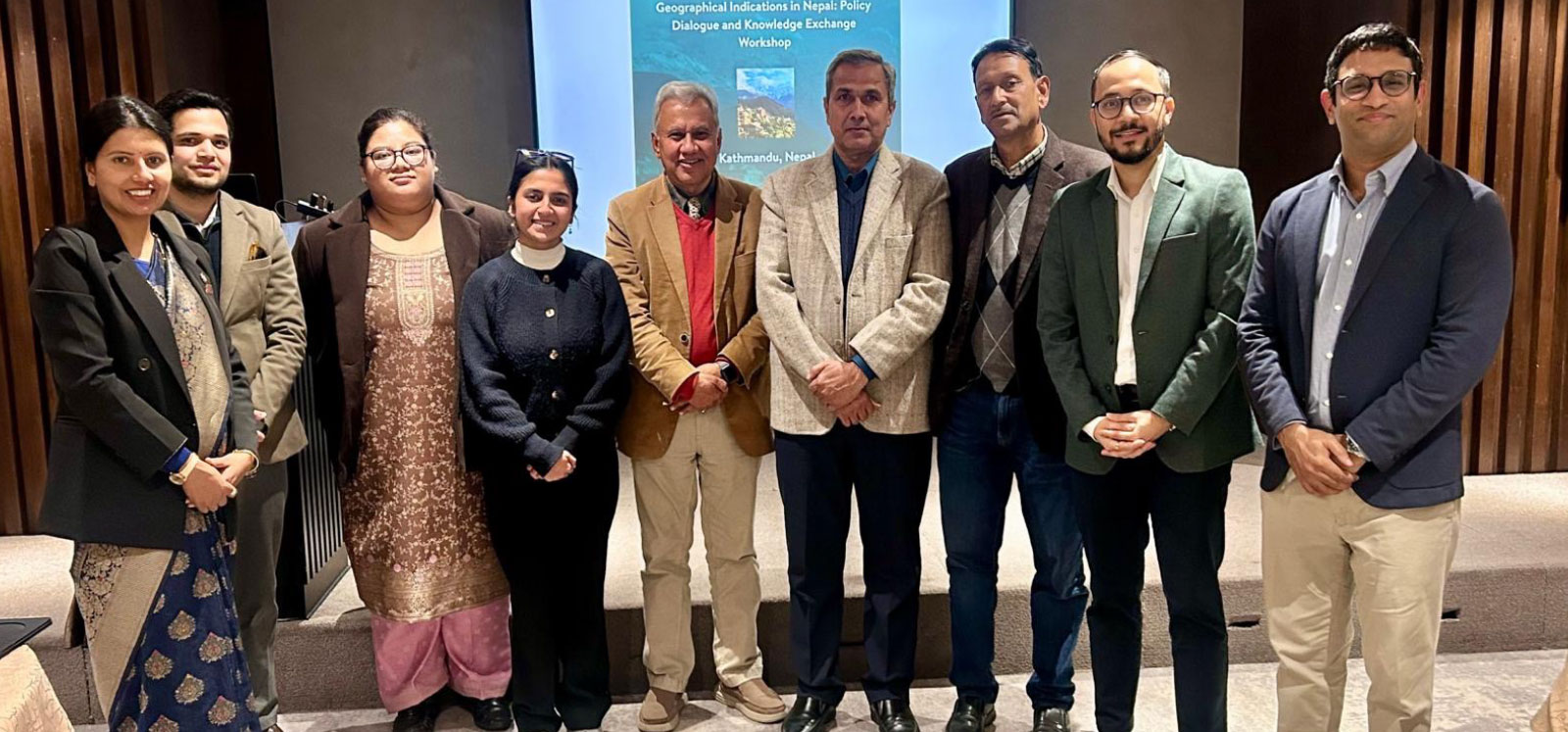
Dr Pratyush Nath Upreti, Reader in the School of Law led a policy dialogue and knowledge-exchange workshop on Geographical Indications (GIs) in Nepal, held in Kathmandu on 13 December. Geographical indications protect products whose quality, reputation, or other characteristics are essentially linked to their place of origin and are increasingly recognised as tools for value addition and rural development. Supported by the Economic and Social Research Council (ESRC) Impact Acceleration Account of Queen’s University Belfast, the workshop contributed to ongoing discussions as Nepal works towards drafting a dedicated legal framework on Geographical Indications.
The event brought together policymakers, former government officials, lawyers, academics, producers, private-sector participants, development practitioners, and representatives from intergovernmental organisations to examine the legal, institutional, and practical dimensions of GI protection.
The workshop brought together perspectives from Sri Lanka and India to share comparative experiences of GI governance. Contributions from Dr Althaf Marsoof (Nanyang Technological University, Singapore) and Professor Lisa P. Lukose (Guru Gobind Singh Indraprastha University, India) highlighted practical lessons on the operation, enforcement, and institutional design of GI systems. These insights were complemented by reflections from Mr Kiran Mainali (Food and Agriculture Organization of the United Nations) and Dr Laxmi Sapkota (Kathmandu School of Law), helping to inform discussions on Nepal’s emerging GI framework.
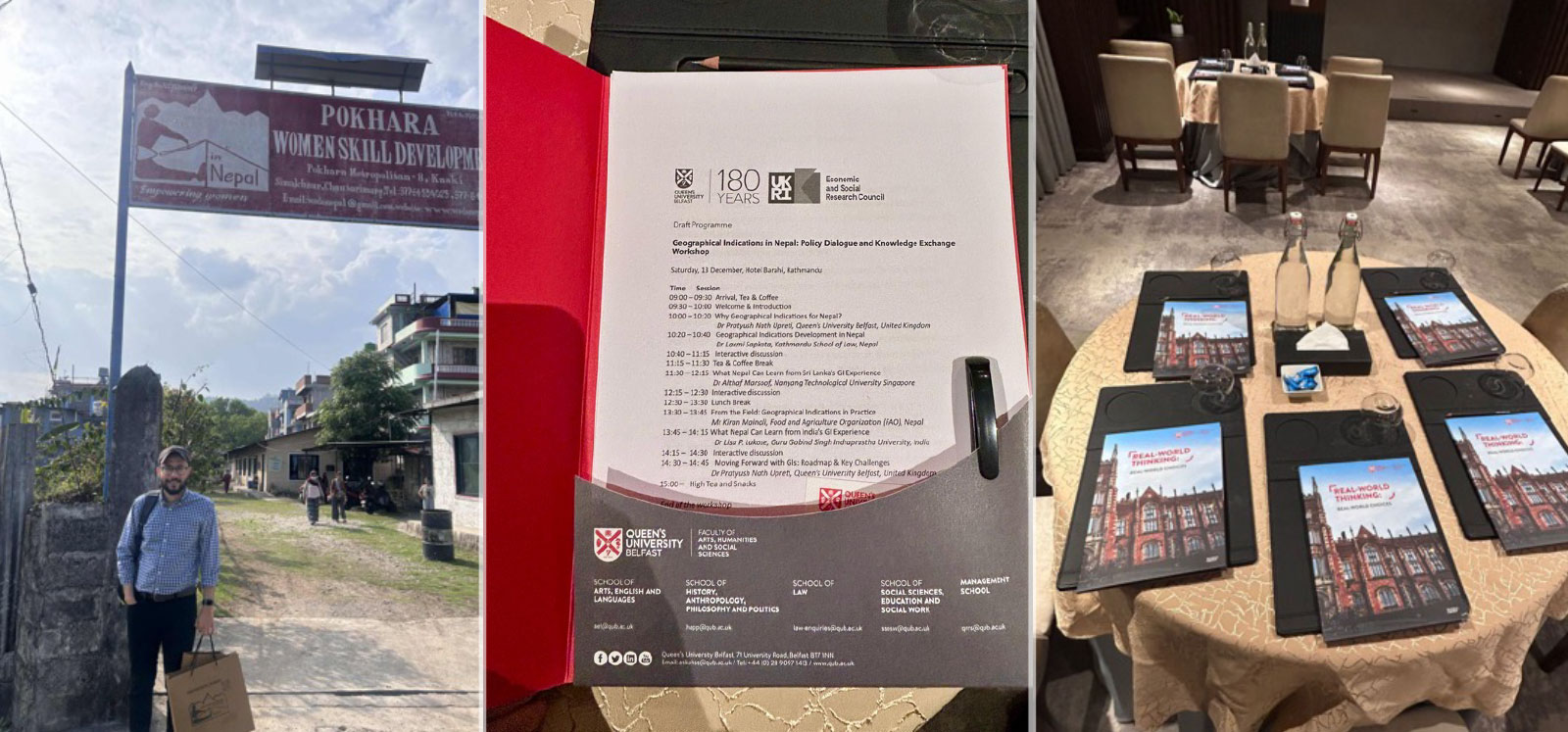
Reflecting on the significance of the event, Dr Upreti noted:
"As Nepal moves towards developing its own geographical indications system, particularly in the context of its forthcoming graduation from least developed country status, such dialogue is crucial to ensuring that emerging laws and institutions are grounded in local realities, informed by comparative experience, and designed with careful attention to feasibility, costs, and the needs of producers and communities."
The workshop forms part of Dr Upreti’s research-led impact activities and Queen’s University Belfast’s wider commitment to evidence-based policy dialogue, international collaboration, and impact-driven work in intellectual property and development.